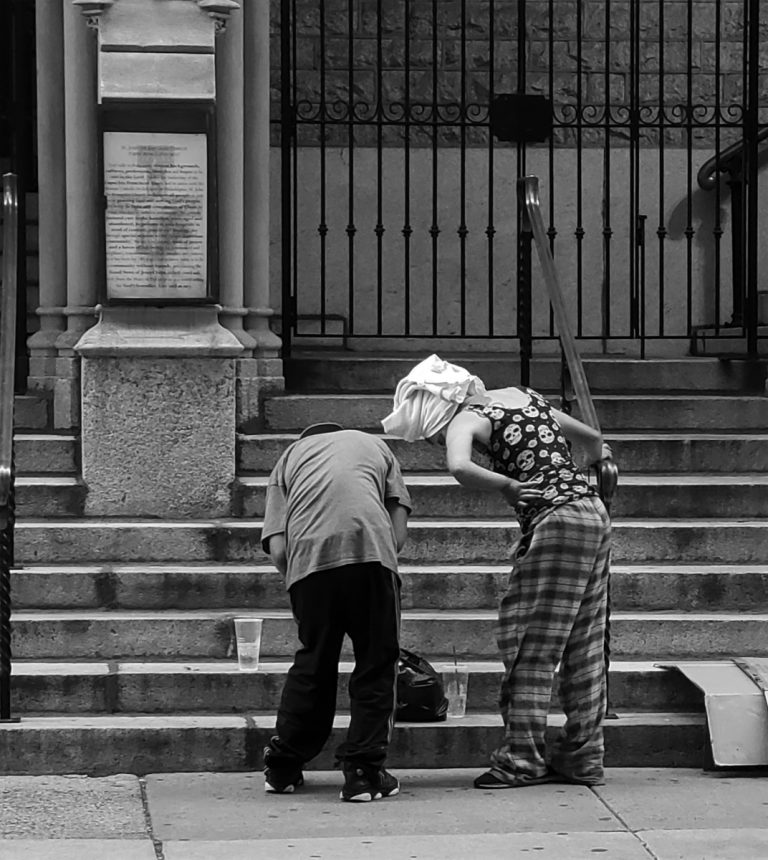
In a world increasingly dominated by artificial intelligence and computer-generated images, the art of street photography holds a unique and irreplaceable place—especially here in Philadelphia. While AI can create technically flawless images in seconds, there’s something profoundly human about street photography that machines simply cannot replicate: the raw, spontaneous, and emotional pulse of real life unfolding in real time.
Philadelphia, with its gritty streets, diverse communities, and layered history, is a city where life never feels scripted. Its neighborhoods—from Fishtown to West Philly, South Street to Kensington—burst with unfiltered energy and stories waiting to be told. Street photography, at its core, is about capturing those moments: the split-second glance, the candid smile, the weight of struggle, the spark of joy. It’s the photographer’s instinct combined with empathy and curiosity that brings these scenes to life, preserving a piece of Philadelphia’s soul.
The Human Eye vs. the Algorithm
AI-generated images rely on vast datasets and programmed algorithms to construct pictures that fit certain parameters. These images can be beautiful, imaginative, or even surreal, but they lack the serendipity and unpredictability of real life. They do not live through the moment, breathe the city air, or feel the energy pulsing through the crowd.
Street photographers, on the other hand, immerse themselves in the environment. They walk the streets for hours, sometimes days or weeks, searching for that fleeting interaction or unguarded moment that tells a deeper story. Their work is not just about aesthetics; it’s about context and connection. Each photograph is a testament to the photographer’s personal perspective and emotional engagement with their subject and surroundings.
In Philadelphia, where resilience and community spirit often rise from hardship, these human stories are essential. AI cannot feel the grit of a summer heatwave at the Italian Market, the passion during a Flyers game downtown, or the quiet dignity of a resident tending their stoop in North Philly. These emotional layers are what make street photography powerful and enduring.
Spontaneity and Imperfection: The Heartbeat of the Streets
One of the most compelling aspects of street photography is its unpredictability. The magic lies in catching the imperfect, unscripted moments—sometimes blurry, sometimes awkward—that perfectly capture a scene’s truth. This imperfection reminds us that life is not staged or sanitized.
Philadelphia’s streets reflect this beautifully. The chipped paint on a corner storefront, the graffiti telling a story of protest or hope, the intertwined lives of strangers crossing paths—these details might seem insignificant but together weave the city’s narrative. Street photographers celebrate these imperfections as much as the moments of beauty, giving viewers a deeper, more authentic connection.
The Emotional Bridge Between Photographer, Subject, and Viewer
Street photography is also a form of emotional dialogue. When done respectfully, it honors the dignity of its subjects and invites viewers to see the world through another’s eyes. It builds empathy, challenges stereotypes, and sparks conversations.
In an era when digital images can be endlessly manipulated or generated without human presence, authentic street photography remains a reminder of our shared humanity. Each photograph is an archive of lived experience, a snapshot of the emotional texture that AI can mimic but not truly create.
Why Philly’s Street Photography Scene Matters
Philadelphia’s photographic community has long embraced this ethos. From historic black-and-white images that documented civil rights marches to vibrant contemporary work capturing the city’s multicultural mosaic, Philly’s street photographers preserve its evolving story.
As AI technology advances, the challenge for photographers in Philly and beyond is to continue emphasizing the uniquely human qualities their work brings to the table: intuition, empathy, spontaneity, and emotional truth. These are not just technical skills but a way of being in the world—one that no AI can replace.
In Conclusion
AI-generated imagery may offer incredible tools and new creative possibilities, but street photography remains vital because it is about people, moments, and emotions lived in real time. Philadelphia’s streets, with their unapologetic honesty and vibrant energy, are the perfect stage for this ongoing human story.
In an age of algorithms and pixels, street photography reminds us to slow down, observe, and connect—to celebrate the imperfect, unpredictable beauty of life as it really is.