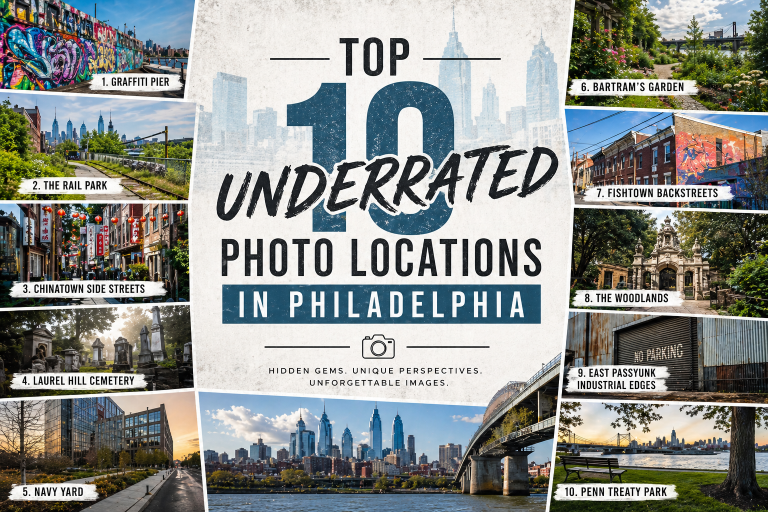
Philadelphia’s greatest photography locations aren’t the ones everyone already knows. Sure, Independence Hall and the Rocky steps are iconic for a reason, but if your camera roll looks like everyone else’s, you’re leaving the city’s best visual stories untold.
Philadelphia has layers. Peel them back and you’ll find street art beside crumbling concrete, overgrown rail lines with skyline views, and riverside parks that feel like they belong to a different city entirely. These are ten spots that serious photographers keep coming back to, and that most tourists never find.
1. Graffiti Pier This one earns its reputation. Graffiti Pier sits along the Delaware River as a living, ever-changing canvas where murals stack on top of murals and industrial decay frames everything beautifully. Come at golden hour when the light cuts through the open sky and the colors pop against rusted steel. It’s chaotic, textured, and completely unlike anything else in the city.
2. The Rail Park (Phase 1) Philly’s answer to the High Line, but grittier and more interesting for it. The Rail Park sits elevated above the street, giving you layered urban compositions you simply can’t get at ground level. Weathered walls, unexpected greenery, and the hum of the city below make this a natural backdrop for images that feel alive.
3. Chinatown Side Streets Skip the main drag. The quieter alleyways one block off the action are where Chinatown actually reveals itself: hand-painted signage, stacked crates, steam rising from kitchen vents, and the rhythm of a neighborhood going about its day. This is street photography in its purest form.
4. Laurel Hill Cemetery Stay with us here. Laurel Hill isn’t just a cemetery, it’s a rolling, sculptural landscape with Victorian architecture, sweeping river views, and light that behaves differently here than almost anywhere else in the city. Visit in fall and you’ll question why you ever shot anywhere else.
5. Navy Yard The contrast here is what makes it work. Sleek, modern buildings sit alongside gutted industrial shells and wide-open empty lots. The Navy Yard is architectural photography heaven, and it’s also one of the better-kept secrets for portrait work when you want something clean, bold, and unexpected.
6. Bartram’s Garden Tucked along the Schuylkill and easy to miss if you’re not looking for it, Bartram’s Garden rewards the photographers who make the trip. Wildflowers, river light, rustic stone structures, and almost no one else around. It changes dramatically with the seasons, which means there’s always a reason to go back.
7. Fishtown Backstreets Everyone photographs the bars and the murals on the main streets. Walk a block or two into the residential side of Fishtown and the city gets quieter, more textured, more honest. Row houses with painted facades, kids on stoops, corner stores with hand-lettered signs. This is the Philly that doesn’t perform for cameras, which makes it far more interesting to photograph.
8. The Woodlands Part cemetery, part mansion, part open parkland, The Woodlands is one of those places that gives you a different image every time you visit. The light through the old trees is extraordinary, and the architectural details of the historic structures reward photographers who slow down and look closely.
9. East Passyunk Industrial Edges The restaurant strip gets all the attention, but walk toward the edges and the neighborhood shifts entirely. Loading docks, corrugated metal, raw brick walls, and alleyways with just enough visual noise to make a fashion shoot or editorial concept come alive without looking like a set.
10. Penn Treaty Park Simple, open, and genuinely underrated. Penn Treaty Park sits right on the Delaware with wide skies, clean waterfront reflections, and enough breathing room to actually think about your compositions. It’s the kind of place where minimalist photographers find exactly what they’ve been looking for.
The best photographers in this city aren’t shooting from the same ten spots. They’re walking an extra block, turning down streets that don’t look like much from the corner, and finding images in places that don’t announce themselves.
Philadelphia will reward that instinct every time. The light here is real, the textures are earned, and the stories are everywhere. You just have to be willing to look for them