In Richard Avedon’s 1957 portrait of Marilyn Monroe, the sequins catch the light while her gaze goes somewhere beyond the camera. She looks tired, or perhaps simply preoccupied. The distinction matters. A photograph can show the position of a person’s shoulders and the direction of her eyes, but the story we make from those details belongs partly to us. Ron Howard’s documentary Avedon, now streaming on Netflix, is most interesting when it asks us to consider how much of that story belongs to the photographer.
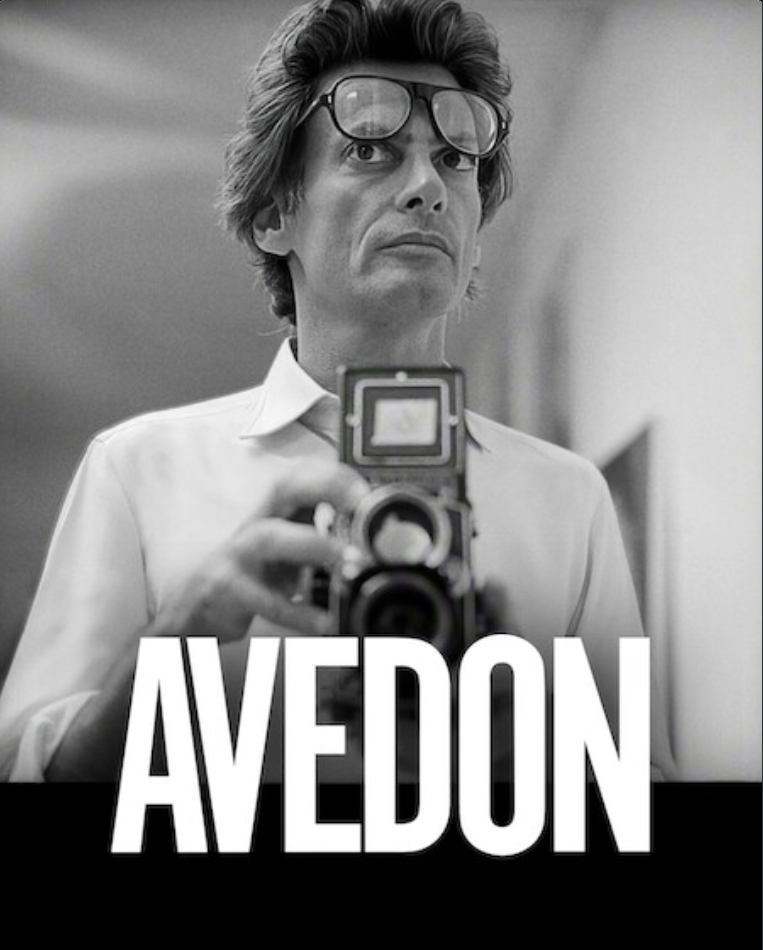
Howard follows Avedon across six decades, from the fashion pages of Harper’s Bazaar to the civil rights era and the portraits he made for In the American West. Avedon speaks through archival recordings, and footage from shoots and interviews with collaborators give some sense of the work that went into pictures that can look effortless. The broad sweep makes this an inviting introduction, especially for viewers who recognize individual photographs without knowing they came from the same person.
Consider Dovima with Elephants, made in Paris in 1955. Dovima extends her arms between two elephants, and the lines of her Dior gown look especially delicate against their creased skin. Avedon could have shown the dress from a more practical angle. Instead, he gives the model something to do with her whole body and places her beside animals that make every inch of that gesture count. The photograph sells the dress by making the viewer remember a scene.
For Philadelphia readers, there’s particular pleasure in looking at Avedon’s portrait of Marian Anderson, made that same year. Her eyes are closed, her head is lifted, and her face sits high in the frame. It’s an unusual use of space for a portrait, and it gives the singer’s concentration an almost physical presence. Set beside the Monroe photograph, it reveals how much Avedon could do with someone who gave the camera very little eye contact. Anderson seems absorbed in the act of singing. Monroe appears to have momentarily turned her attention elsewhere. Neither picture needs the sitter to look directly at us.
The plain white backgrounds of In the American West give the photographer even more control over what we see. In the 1981 portrait of beekeeper Ronald Fischer, bees crawl across his bare chest and face. There’s no hive, no protective suit and no landscape to locate him. The photograph makes an ordinary fact of Fischer’s working life look extraordinary. It also leaves a fair question hanging in the air. How much of what we remember is Fischer himself, and how much is the situation Avedon arranged for him?
Howard’s film could spend more time there. The people who worked with Avedon help explain his stamina, ambition and attention to detail. Their admiration also sets the tone, and the documentary is more comfortable explaining what made him exceptional than asking what his methods demanded of the people in front of the camera. Hearing more from the sitters would have added another perspective on a process in which Avedon got to choose the setting, direct the encounter and decide which fraction of a second the public would see.
That leaves photographers with a more useful takeaway than a lesson in lighting or a reason to buy a white backdrop. Avedon’s pictures are worth revisiting for the decisions that can go unnoticed on a first look, such as how much space he leaves around a face, what he removes from the frame, and which expression he chooses to keep. Howard’s documentary makes the career accessible. The photographs provide the argument that stays with you afterward.